Showing posts with label Press. Show all posts
Monday, 16 July 2018
Tuesday, 10 July 2018
Friday, 1 June 2018
Little Singham to hit the summer out!
LITTLE SINGHAM ON PATROL!
With just a few weeks remaining for the schools to re-open for a new academic
year across the country, Discovery Kids is back at it again with a grand surprise
for the kids all over! The success that Little Singham IP garnered has given a
way to yet another collaboration of Discovery kids with Rohit Shetty Picturez and Reliance Animation. A full
length Animated feature film is set to hit our TV sets on 2nd of June at 1:30 PM and 5:30 PM.
The film is
directed by
Prakash Satam; Series
director is Vikram Veturi; Script and the story has been written by Nidhi Anand
while the music has been composed by Prakishit Lalwani and Raju Singh.
This film adds yet another jewel in the veteran music composer after hit
children shows like , "Shiva , Motu Patlu, Gattu Battu, Vir : The Robot
Boy, Chacha Bhatija, amongst others!
Little Singham Aur Kaal Ka Maha Jaal is a cinematic brilliance that will take the kids on an adventurous
ride throughout!
Saturday, 26 May 2018
Mass Royalty Payout
Music composers, lyricists receive Rs 13 crore in largest royalty payout
Bella Jaisinghani | TNN | Updated: Apr 24, 2018, 13:52 IST
MUMBAI: In the single largest payout of royalty to composers and song writers, the IPRS (Indian Performance Rights Society) distributed Rs 13 crore among over 2,000 members at a ceremony in Andheri on Monday.
Luminaries from the Hindi filmindustry arrived to receive royalty and cheer the recipients. Shravan of the Nadeem-Shravan duo, Dilip Sen-Sameer Sen, Jatin of the Jatin-Lalit duo, Shibani Kashyap, Sanjeev Darshan, Harmeet, Sudhakar Sharma, A M Turaaz and Prashant Ingole were among those who collected royalty.
This payout follows a prolonged churning over the functioning of IPRS, including a court battle, and change in IPRS’s constitution. Its board was revamped with Javed Akhtar taking over chairmanship. It was he who spearheaded this reform.
Akhtar said, “We changed IPRS constitution, held fresh elections and then conducted a series of meetings with music publishers (companies). It fructified in this goodwill gesture where six firms contributed this amount.” TV synchronization royalty was paid by PPL on behalf of Saregama, Sony Music, Tips, Universal Music, Venus and Aditya Music. It encompasses music utilized after 2012. “The IPRS board is trying to bring other publishers like T Series, Zee Music, Eros and YashRaj Music on board. I am sure they will be convinced on seeing the process has been streamlined,” said composer Raju Singh who is on the board of directors.
“Henceforth the monies will be paid on a log basis, which is the actual number of times a song is used by various segments, including radio stations, TV channels or downloads. Even Apple and Amazon have become members of IPRS so they will pay royalty from songs that users download,” said Singh.
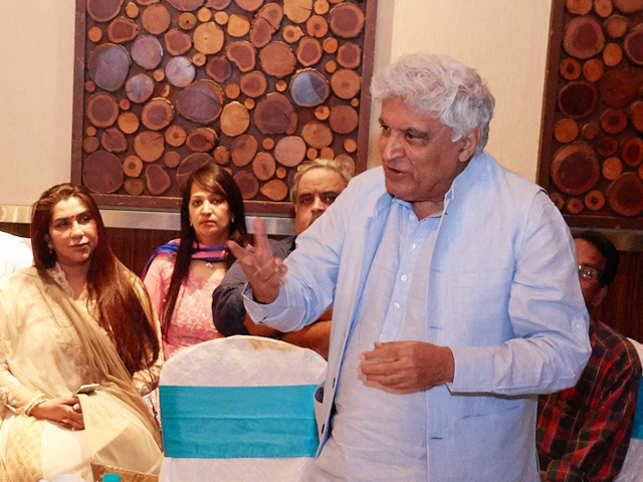
Javed Akhtar spoke about various types of royalty from TV and radio broadcasts, ringtones, TV serials, song downloads as well as streaming. “I am pleased we could do something for these brilliant minds who have created such wonderful music. The happiness on their faces was so gratifying.” The business of IPRS is to issue licences to users of music and collect royalties from them, for and on behalf of its members— authors, composers and publishers of music— and distribute the royalty amongst them after deducting administrative costs.
13 Crores Royalty payout
Composers, lyricists share Rs 13 crore bonanza
In a historic move, the Indian Performing Rights Society (IPRS) distributed royalty of around Rs 13 crore among music composers and lyricists.
In a historic move, the Indian Performing Rights Society (IPRS) distributed royalty of around Rs 13 crore among music composers and lyricists. Javed Akhtar, chairman of IPRS, distributed the money received for TV synchronisation among all members who are authors and composers.
Saregama, Sony Music, Tips, Universal Music, Venus and Aditya Music have agreed to pay royalties, while others have still not agreed despite the law saying so.
Raju Singh, Sudhakar Sharma, Shravan Rathod, Harmeet, A. M. Turaaz, Prashant Ingole, Jatin Pandit, Sanjeev Darshan, Dilip Sen-Sameer Sen, Ashish Rego, Shibani Kashyap and many more were seen at the event.
“Rs 10,000 was distributed to authors with 10 or less than 10 pieces of work registered with the IPRS and the balance royalty was distributed equally to the remaining authors / composers, which worked out to Rs 53,000 each. This is called synchronisation royalty, which is only if your songs have been used in other films or ads or TV,” says Javed.
“The laws have changed and people have changed. People need to be paid and the system needs to be corrected. Now, every three months, composers, writers and publishers will get their royalties. Some music companies have come and paid us Rs 13 crore as a lump sum accrued over the past six years and we have distributed it. Hopefully, other big music companies will also join in,” says the lyricist.
(Article Courtesy: http://www.asianage.com/entertainment/bollywood/250418/composers-lyricists-share-rs-13-crore-bonanza.html)
◀️◀️◀️
Debate continues. EEMA and IPRS persist on the copyright law issues
EEMA and IPRS continue debate on persisting
copyright law issue
The Event and Entertainment Management Association (EEMA) met with the
IPRS board on 29 March 2018 to arrive at some resolution with regard to music
copyright laws, a longstanding reason of friction between both parties.
By Yamini Singh | April
02, 2018
For the longest time event companies have been complaining about
the cost of music licenses they have to bear to multiple copyright claimants
such as IPRS, PPL, ISRA, individual music companies, agencies such as Novex,
etc.
Broadly, IPRS license is needed for
all events (live performance/ DJ/ recorded music being played) wherein music is
used. IPRS covers the copyright license for Musical and Literary works. PPL is
needed only for events wherein recorded music is played. PPL covers the use of
sound recording. Weddings and related events do not have to obtain music
licenses.
Previously the court had ordered
IPRS to bring more transparency to the licensing process by way of better
documentation, following which it had de-registered itself as a copyright
society. It has recently presented the new tariff structure and rates to enable
the requested transparency and registered itself as a society again. A fixed,
predictable rate structure has just been introduced and is available on the
IPRS website. An online payments system has also been introduced. As a rule, no
cash payments are permitted by IPRS for their license issuance.
In a latest development members of
EEMA met with the IPRS board on 29 March in order to arrive at some resolution
to this long and enduring conflict. EEMA was represented by Sabbas Joseph,
President-EEMA; Vijay Nair, VP- EEMA; Manuj Aggarwal (Percept Live), Dinesh
Kummar (Wizcraft). IPRS was represented by Javed Akhtar (Chairman-IPRS), Rakesh
Nigam, Ameet Datta, Mandar Thakur, Devraj Sanyal, Raju Singh, Shirley Singh.
As a way forward, a Joint Committee
between IPRS and EEMA has been set up in order to go over each of the points
and resolve all issues so that a joint memorandum can be signed before the end
of April 2018 covering all fronts ensuring that the event industry and the
music industry work together toward common initiatives and goals.The next
meeting is scheduled for today.
(Article Courtesy : http://everythingexperiential.businessworld.in/article/EEMA-and-IPRS-continue-debate-on-persisting-copyright-law-issue-/02-04-2018-145112/)
Javed Akhtar and a Brand New IPRS
Javed Akhtar brings music fraternity together to
create brand new IPRS
ET Bureau | Updated: Dec 21, 2017, 01.08 PM IST
After a long acrimonious battle involving allegations,
copyright issues from both sides and courtroom dramas over several years, all
the music composers, the fraternity of lyricists and music companies have
settled amicably with each other and come together as one music industry.
This has resulted in IPRS (Indian Performing Rights Society — the 48-year-old copyright royalty collection body) getting its official registration as a copyright society back from the Government recently. It is now the only official and functional copyright society for Musical Works and associated Literary Works in India (for collecting royalties of underlying musical and literary works).
The IPRS, originally formed in 1969, represents a majority of Indian music composers, lyricists and music companies. IPRS as a copyright society is authorised and mandated to licence copyrights in underlying musical and literary works, in songs / background music for broadcast (TV & radio), hotels, bars, clubs, events, establishments and digital music streaming services, effectively wherever music is played or sold, whether physically or digitally.

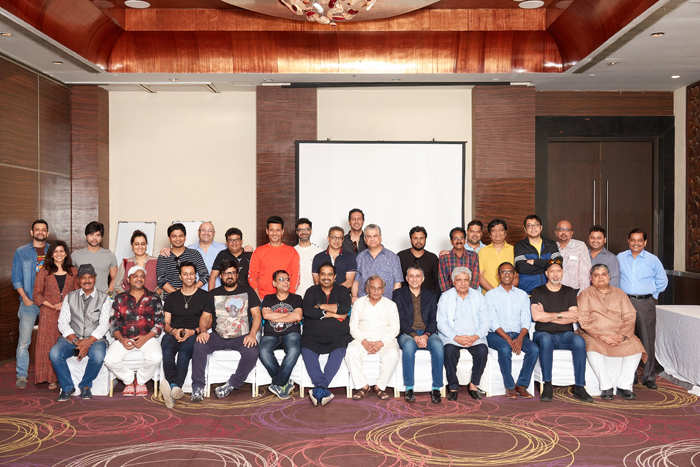
(Standing L-R) Mayur Puri (lyricist), Preeti Mamgein
(lyricist & President FWA), Himesh Reshammiya (composer), Kausar Munir
(lyricist), Ankit Tiwari (composer), Raju Singh (composer), Panchi (lyricist),
Manmeet (composer), Jigar Saraiya (composer), Viju Shah (composer), Suleman
(composer), Kumar Taurani (Managing Director - Tips) , Kumaar (lyricist),
Sahithi (lyricist), Clinton (composer), Zama Habib (lyricist FWA), Anupam Roy
(composer), Rakesh Nigam (CEO IPRS), Mandar Thakur (Times
Music), Ganesh Jain (Venus)
(Seated L-R) – Nawaz Arzoo (lyricist), Sajid (composer), Salim (composer), Wajid (composer), Milind (composer), Shankar (composer), Anandji (composer), Vikram Mehra (CEO - Saregama ), Javed Akhtar (lyricist & IPRS Chairman), Shreedhar (Sony), Loy (composer), Sharang Dev (composer)
The new IPRS board is chaired by none other than
the legendary lyricist, Javed Akhtar. This is what the key players had to say
about the new development:
“Now that all the members are pulling in the same
direction, we have the ambition to transform IPRS into a worldclass society. We
intend to make licensing easy and transparent for all the users, bring speed
and accuracy to the flow of royalties, and generally make IPRS a potent force
for Indian culture.”
— VIKRAM MEHRA, MD&CEO, Saregama and IPRS board member
“The reconciliation of art and business
is a major landmark. It will help create a more vibrant, confident and creative
music industry, one that will carry Indian culture to global audiences. An
efficient and transparent Copyright Society, now that we have put our
differences behind us, will be a major source of income for lyricists and
composers — most of whom depend on royalties for their livelihood, or as their
pension plan. And I also believe it will offer a better return on investment to the music publishers.
— SHUBHA MUDGAL, composer and artiste

“Finally, we get the feeling that the IPRS is a
body for the artistes by the artistes! I think the time has come when we all
will work with each other and a great cooperation is developing amongst authors
and publishers. The value of royalty will become clearer in the minds of music
lovers.”
— SHANKAR MAHADEVAN, music composer and artiste
“With the new constitution and a new governing
board, IPRS is entering a new era. This era will not be of confrontation but of
cooperation between the authors and the publishers. I see an extremely
prosperous future for everyone.”
— JAVED AKHTAR, lyricist and IPRS Chairman

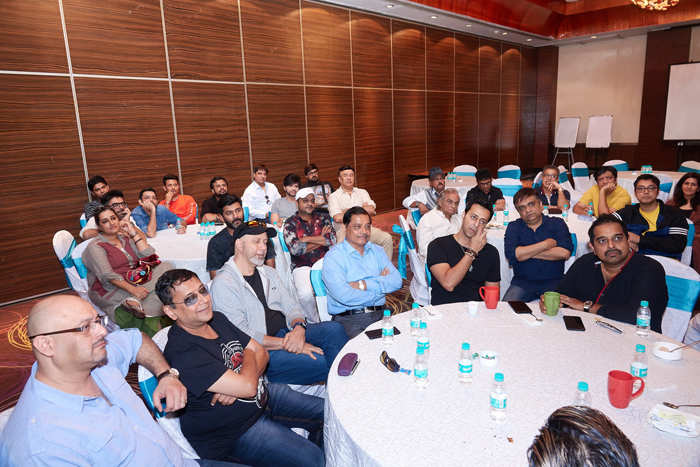
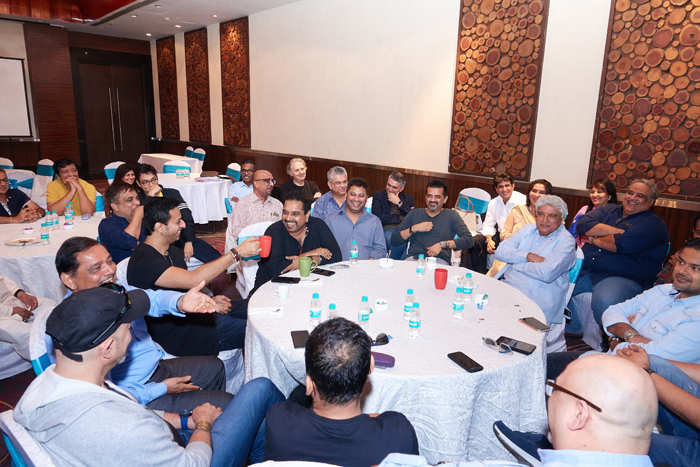
The IPRS meeting was attended by members of the
music fraternity.
Indian Military Academy invites Javed Akhtar and Raju Singh
Javed Akhtar
Invited By Indian Military Academy To Address Army Cadets
IMA has adopted a
song written by Akhtar, composed by Raju Singh and sung by Sonu Nigam, for its
passing out parades.
IANS | Updated: October 15, 2017, 10:32 AM
IST
(Image : Yogen Shah)
Dehradun : Veteran
writer-lyricist Javed Akhtar says, he felt honoured to address a meeting at the
Indian Military Academy (IMA) here for army cadets.
Akhtar took to Twitter on Saturday to praise the "great" institution. "Had the honour of being invited by Indian Military Academy, Dehradun to address gentlemen cadets of our army. What a great institution. Thank you, Lieutenant General Jha," Akhtar tweeted.
According to reports, IMA has adopted a song written by Akhtar,
composed by Raju Singh and sung by Sonu Nigam, for its passing out parades.
Akhtar,
who is married to veteran actress Shabana Azmi, has been a part of the Indian
entertainment industry for over three decades.
Along with his former partner and veteran writer Salim Khan, Akhtar has co-written scripts of popular Bollywood films like Seeta Aur Geeta, Zanjeer, Deewaar, Sholay and Don.
Friday, 25 May 2018
Best background score nominee for Jio Filmfare (Punjabi) Awards 2018 - Raju Singh
Nominations for the Jio Filmfare (Punjabi) Best Background Score Award 2018
By Filmfare | March 19, 2018, 7:42 PM IST
Jaidev Kumar (Rabb Da Radio)
Jaidev Kumar (Sardar Mohammad)
Jatinder Shah (Lahoriye)
Raju Singh (Jindua)
Sunny Bawra - Inder Bawra (Jora 10 Numbaria)
Surinder Sodhi (Saab Bahadar)

(Article courtesy : https://www.filmfare.com/news/bollywood/nominations-for-the-jio-filmfare-awards-punjabi-2018_-27178.html)
◀️◀️◀️
The Unsung Musician : Late Charanjit Singh and his ahead of time music!
THE BLOG

(COURTESY RANA GHOSE)
08/07/2015 1:30 PM IST | Updated 15/07/2016 8:25 AM IST
RIP Charanjit Singh, The Most Influential Musician You May Have Never Heard Of
By Suprateek Chatterjee(COURTESY RANA GHOSE)
For renowned Bollywood sessions musician and electronic music pioneer Charanjit Singh, Saturday was a normal day. He had spent the day resting, practicing on his keyboard with his headphones on and had ended it by having dinner with his family at his residence in Mumbai's Bandra area. The 75-year-old veteran multi-instrumentalist -- who had played regularly and tirelessly in the orchestras of renowned Hindi film composers such as Naushad, RD Burman, and Laxmikant-Pyarelal between the '60s and the '80s -- had been taking it relatively easy, as he'd just been diagnosed with blockages in his heart in June.
"We had a nice, quiet dinner and a drink afterwards," said his son Raju Singh, a renowned music composer who has composed background scores for more than a hundred Hindi films. "He'd been taking all these blood thinners and his health for the past 15 days had actually been fine." When their mother accompanied him and his sister downstairs, Singh appeared at the window to wave goodbye: a gesture that surprised them because they'd never seen that from him before.
The next morning, he was found cold and motionless in his bed. Doctors said that Singh had suffered cardiac arrest in his sleep and passed away peacefully.
Charanjit Singh was one of the most influential musicians in the history of contemporary music in India that you may have never heard of. Millions of Indians have heard him play key parts on iconic Bollywood songs for decades without knowing they were played by him. Some of these include the unforgettable opening drone to 'Dum Maro Dum' (played on a transichord -- a synthesizer version of an accordion) from Hare Rama Hare Krishna (1971) and the keyboard solo in the beginning of 'Mere Umar Ke Naujawanon' from Karz(1980).
Raju related a story to me about how Burman, on whose songs Singh is said to have introduced and popularised the usage of bass guitars in Hindi film music, had said of his father: "You remove the bass track from my songs, they will fall flat. He has taught me that the bass can be used as a solo instrument."
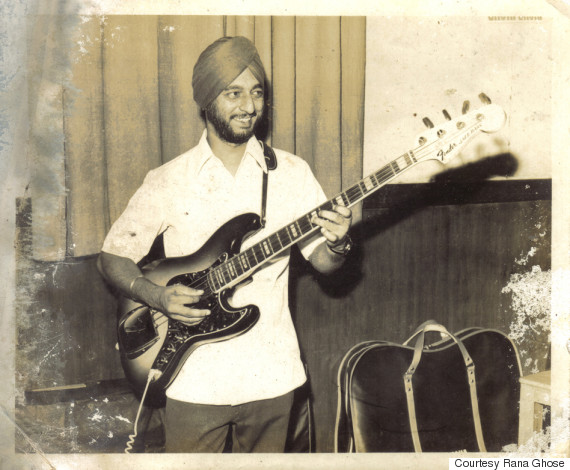
A younger Charanjit Singh playing the bass guitar as a Bollywood sessions musician
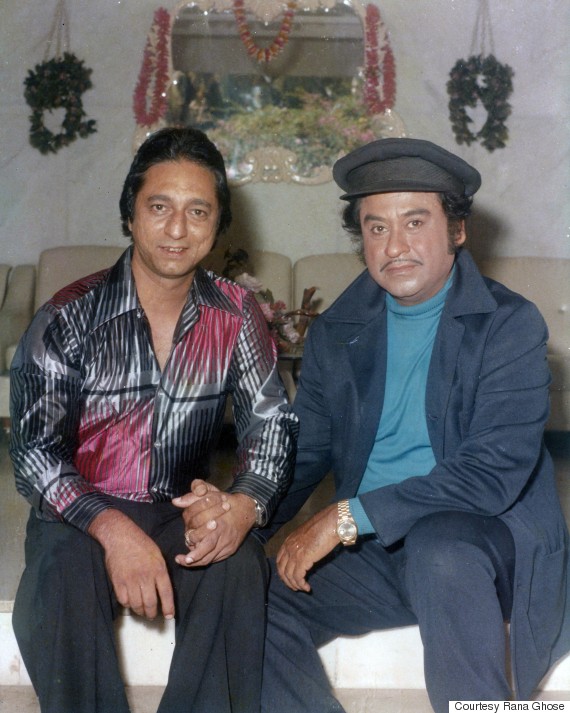
Singh with legendary Bollywood playback singer Kishore Kumar (right)
But this was only one of the facets to the senior Singh's life. Towards his final years, a period of time most people his age spend in and out of hospitals or being bed-ridden, Charanjit Singh was discovered to have accidentally created a sub-genre of electronic music called 'acid house'. In 2010, a Dutch DJ and record collector named Edo Bouman re-released one of his older, forgotten albums -- Ten Ragas To A Disco Beat (1982) -- on his label Bombay Connection.
A completely electronic album created with help of the then-newly-introduced Roland TB-303 bass synth, it had turned out to be an acid house record that released five years before Chicago-based Phuture's Acid Trax, generally regarded as the first. From 2012 onwards, the then-72-year-old musician, who grew up amidst modest circumstances in Mumbai's Matunga area, found himself touring Europe twice and the United States once as a DJ with Dutch producer Thee J Johanz. From having helped forge a sound that was familiar to lovers of Bollywood music across the world, he spent his final years playing to often-tattooed young electronic music fans at festivals like the inaugural 2013 edition of Magnetic Fields in Rajasthan.
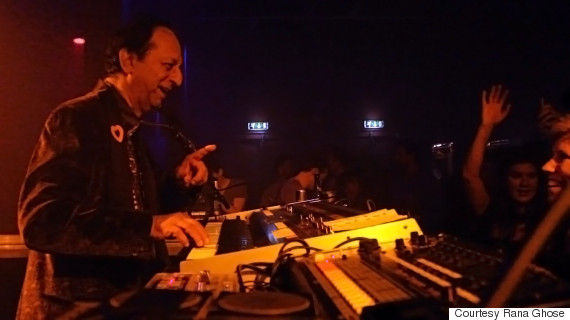
Singh performing to a crowd at a club in Groningen, Netherlands, in May 2013
Ten Ragas To A Disco Beat, whose contents are exactly what its title suggests (keyboard renditions and arpeggios adhering to Hindustani classical ragas set to electronic drums), was described by Bouman as "stunningly modern... like an ultra-minimal Kraftwerk". Back in 1982, when it was released by HMV, it was so ahead of its time that it, naturally, went completely unnoticed. Utilising some of the most up-to-date Roland synthesizers of the time, Singh had unknowingly laid the foundation to a genre that would -- according to several credible, published historical accounts that have traced the history of electronic music -- go on to influence many popular genres like trance, breakbeat, big beat, techno, and trip-hop.
A day after his sudden demise, Raju Singh had barely recovered from the shock of losing his father, a man he remembers as a quiet, introverted man consumed by a life-long passion to learn and master virtually any instrument he could lay his hands on. He started with the mandolin and Hawaiian steel guitar, then moved to bass guitar, and then to more unconventional instruments like the clavioline (a French electronic keyboard whose sound Hindi film music lovers will recognise as that of the 'Nagin' tune), the transichord, and eventually the synthesizer.
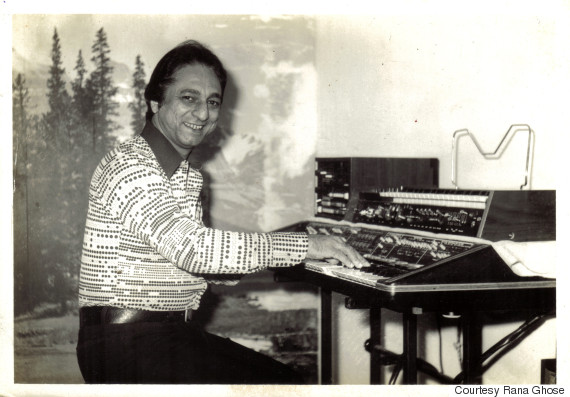
A picture from 1980 showing Singh playing a synthesizer
"He wouldn't talk much," he said, over a phone conversation. "I remember him sitting in his room and practicing sometimes for 15-16 hours a day." In June, Raju and his 20-year-old son Joshua Singh, drummer of indie rock act Spud In The Box, were supposed to accompany him on a Europe tour that had to get cancelled because of his health problems. "It would've been the first time three generations from our family would've performed together," he said.
Over the course of his career, Charanjit had nine featured releases, eight of which were cover albums. One of the most notable ones was One Man Show(1974), which featured him reinterpreting popular Bollywood tunes with a transichord and a drum machine. However, according to a 2010 article by The Guardian, Bouman said, "He told me, 'Frankly, this [Ten Ragas To A Disco Beat] was the best thing I did. Other albums are all film songs I just played. But this was my own composition. Do something all of your own, and you can make something truly different.'"
In the '70s, his readiness to experiment with new technology and global musical trends set him apart from most of his peers. According to his son, the likes of Burman and Laxmikant-Pyarelal were known to cancel or push sessions to accommodate Charanjit's availability. He was also apparently the only musician who had the privilege of being allowed a glass of whiskey before recording a take -- such was the confidence in his ability. "He believed in putting 24 hours into practice and then spending the next 24 hours recording," said Joshua, who didn't meet his grandfather during his childhood as often as he heard near-apocryphal accounts of Charanjit's spartan discipline and unfettered determination. "Music was his entire life and he never stopped being excited about it."
Over the past five years, Singh would often be said to react to his growing hipster-cred and enthusiastic audience response with a mixture of bemusement and nonchalance, as is evident in this 2011 interview to The Guardian. Another interview, by The Border Movement, describes an experience from one of his European concerts thusly: "...he experienced a surge of adrenalin in Brussles [sic], when they exploded into frenzy at the drop of the 808 bassline on Raag Bhairav and he felt "happy" to be reunited with the Roland Jupiter-8, TR-808 and TB-303, 31 years after he first laid hands on it."
By the end, his contributions to contemporary Hindi film music and electronic music arrange themselves in a pattern that matches his disciplined and patient approach to music itself. Singh may now be feted and remembered as the inventor of a somewhat esoteric sub-genre of electronic music that not many in India may have a taste for, but the realisation that this sound's genesis had been hidden for the past 30 years in the layered arrangements of the country's most popular and mainstream genre without us realising it is sobering.
His incredible re-emergence is proof that sometimes genius takes its own sweet time to find its way out of the haystack of obscurity, and that perseverance always pays off.(Article courtesy: https://www.huffingtonpost.in/suprateek-chatterjee/rip-charanjit-singh-the-m_b_7750646.html)
Scoring in films , Raju Singh.
Bollywood Composer Raju Singh on Film Scoring Process
By
Salim ALi
May 26, 2017
Raju Singh, one of Bollywood's most in-demand composers, recently spoke with Berklee students about his experience with creating music for TV shows and films such as the current box-office hit Half Girlfriend. Singh is a composer, arranger, music director, producer, musician, and singer who has more than 70 composing credits to his name from Indian movies and TV shows.
Berklee’s Film Scoring Department brought Singh to campus to discuss the Bollywood film scoring business and the different experiences that have informed his diverse body of work. In addition to his most recent credit (for background music on Half Girlfriend), Singh has composed for major feature films such as Ek Villain and TV series such as C.I.D., so he had no shortage of experience to share.
Singh discussed his father's influence on his life as a musician; his father would master a musical instrument, play with some of the top musicians around India, and then move on to study and eventually master another instrument. Similarly, Singh has adopted an inquisitive and flexible approach to his career endeavors. Singh let students in on some of his creative practices and shared film clips in order to reveal the thinking behind some of his scoring work.
The following is an edited and abridged selection of the insights he shared with the students.
By
Salim ALi
May 26, 2017

Raju Singh, one of Bollywood's most in-demand composers, recently spoke with Berklee students about his experience with creating music for TV shows and films such as the current box-office hit Half Girlfriend. Singh is a composer, arranger, music director, producer, musician, and singer who has more than 70 composing credits to his name from Indian movies and TV shows.
Berklee’s Film Scoring Department brought Singh to campus to discuss the Bollywood film scoring business and the different experiences that have informed his diverse body of work. In addition to his most recent credit (for background music on Half Girlfriend), Singh has composed for major feature films such as Ek Villain and TV series such as C.I.D., so he had no shortage of experience to share.
Singh discussed his father's influence on his life as a musician; his father would master a musical instrument, play with some of the top musicians around India, and then move on to study and eventually master another instrument. Similarly, Singh has adopted an inquisitive and flexible approach to his career endeavors. Singh let students in on some of his creative practices and shared film clips in order to reveal the thinking behind some of his scoring work.
The following is an edited and abridged selection of the insights he shared with the students.
On His Diverse Career:
"I get to do jingles and ads…two years, three years…and then I'll say, 'Now I need a change. I've done enough.' I'll come back to it again, and never close the door. Let's say I want to do film scoring; I've done that for a few years. Then, sometimes there's a live event happening. Sometimes there's a Broadway show kind of thing happening, and then there's television happening. The moment you're feeling good about one and feeling a routine rut in something else, it’s time to move on. That’s how I’ve managed to work."
On Musicianship:
"It's up to you to feel and achieve that thing you want for your instrument, or that thing that you do. When you're a musician, it's not only about what you're doing. The observation has to be on what's happening around you. That experience is going to be what actually gets you [to a professional level]."
On Film Scoring:
"What is scoring? It's like being given a sketch and all of us are given three similar crayons or colors. We are all going to color it with the same colors but we end up creating something very different."
On Point Of View:
"How many ways can you treat a scene? There are different things happening and different tempos from each [character's] point of view, so the music changes. Whose point of view are you trying to convey?"
Subscribe to:
Posts (Atom)